
Reading a D.C. Neighborhood: What to Notice Beyond the Listing
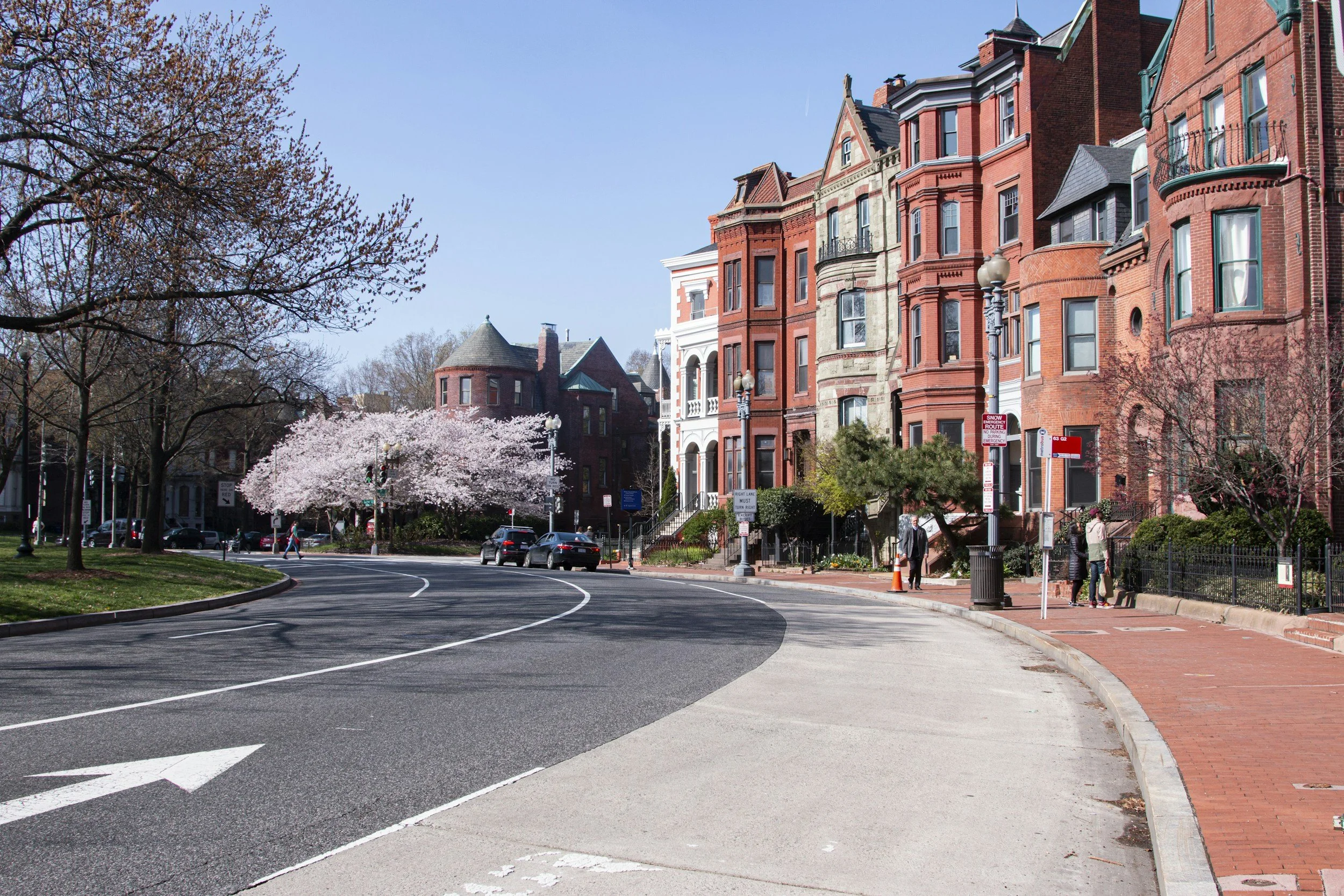
There's something I do every time I'm evaluating a property in D.C., and it happens before I step inside the house.
I walk the block.
I look at the other homes. I notice whether the stoops are maintained, whether the gardens are tended, whether the sidewalk feels like a place where people actually spend time. I look at the trees. The parked cars. The amount of light that hits the front of the house at that hour.
It might sound minor. But over the years, I've come to believe that the neighborhood tells you something fundamental about a home's value that the listing sheet can't.
The things you feel before you think
First impressions of a neighborhood are not random. They're picking up real information.
A street where the homes feel cared for signals something beyond aesthetics. It says the people who live there are invested. That investment tends to be self-reinforcing... one well-kept rowhouse encourages another, and the effect compounds over time.
The reverse is also true. Deferred maintenance on one property often shows up on the next, and the next. Not always, but enough to pay attention to.
In D.C., these patterns can shift within a few blocks. You can walk from a street that feels deeply established to one that feels transitional in under five minutes. Neither is inherently good or bad. But they represent different kinds of investments, and it helps to understand which one you're making.
What walkability really means
Everyone talks about walkability. But I've started to think the way most people use the word is too narrow.
It's not just about whether there's a coffee shop within a ten-minute walk, though that matters. It's about the quality of what's around you, and whether it creates a daily life that feels sustainable.
A Metro stop is useful. But how does the walk to the Metro feel? Is it pleasant, or is it just... a walk? A grocery store nearby is convenient. But is it one you'd actually enjoy going to?
These distinctions sound small. They become very large when you're living them every day.
The neighborhoods in D.C. that hold their value over multiple cycles tend to be the ones where the surrounding infrastructure supports a life, not just a commute. Parks that get used. Restaurants where you become a regular. A hardware store, a bookshop, a dry cleaner. The kind of texture that makes you want to stay on your block rather than leave it.
The seller's version of this
If you're selling a home in D.C., the neighborhood question works in reverse.
You're not just selling square footage and finishes. You're selling a location, and the lifestyle that comes with it. The buyers who will pay the most for your home are the ones who can see themselves in that context, walking to the places you walk to, knowing the corners of the neighborhood that make it feel like theirs.
A good listing communicates this. Not in a brochure-y way, but in a way that feels real. What's the light like in the mornings? What do you hear when you open the windows? What's the walk to the park like with a dog or a stroller?
These details don't always make it into the MLS description. But they're often what closes the deal.
What I look for
When I walk a neighborhood with a client, I'm paying attention to a few things that don't show up in the data.
I look at the commercial spaces. Are they occupied? By what? A block with a locally owned bookstore and a wine bar tells a different story than one with three vacant storefronts and a vape shop. Both are information.
I look at construction activity. Renovation and new builds are a signal that capital is flowing into a neighborhood. That usually means someone with money is betting on its future. It doesn't guarantee anything, but it's worth noting.
I look at the public spaces. Are people in the park? Are the benches being used? Is the playground busy? A neighborhood that draws people outside is usually a neighborhood that's working.
And I pay attention to what's not changing. Stability can be a sign of strength... a neighborhood that has held its character through multiple market cycles. Or it can be a sign of stagnation. The difference is usually visible if you know what you're looking at.
The lived version
I'm from this area originally, and I still find it one of the most interesting places to work in real estate. Washington has layers. The relationship between a block and its nearest park. The way a row of homes faces the afternoon sun. The quiet streets that never show up on the recommendation lists but feel exactly right when you're standing on them.
For buyers, the advantage is in spending time in the neighborhoods you're considering. Not just visiting open houses, but being present. Walking around on a weeknight. Getting a sense of the place when it isn't performing for you.
For sellers, the advantage is in understanding what you're actually offering. The home is part of it. The neighborhood is the rest. And the listing that tells both stories well is the one that tends to find its buyer.
If you're exploring D.C. neighborhoods or trying to understand where your property fits into the broader picture, I'm always glad to share what I've noticed.